For a long time, Bollywood seemed stuck between two extremes. On one side were massive, star-driven blockbusters with huge budgets. On the other were small, OTT-focused films made mainly for streaming audiences. Somewhere in the middle, the mid-budget Hindi film almost disappeared.
But over the last year or two, something interesting has happened. Mid-budget films are slowly finding their way back to theatres—and audiences are responding.
After years of box office slumps, the question many are asking is simple: what changed?
When mid-budget films stopped working
Between 2018 and 2022, mid-budget Bollywood films struggled badly. Movies made on reasonable budgets—without massive VFX or superstar hype—failed to draw audiences to cinemas.
Films like Laal Singh Chaddha and 83, despite strong names and good intentions, underperformed. The pandemic made things worse. Viewers got used to watching similar films on OTT platforms at home.
Producers lost confidence. Many mid-budget scripts were either shelved or sold directly to platforms like Netflix and Amazon Prime Video.
Theatres became risky, and nobody wanted to take chances.
The OTT boom changed audience habits
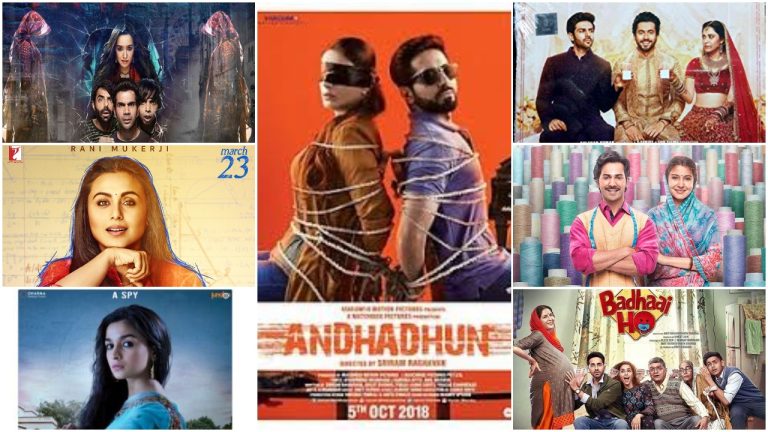
OTT platforms trained audiences to value story and performance over scale. Films like Andhadhun, Bulbbul, and Sherni found large audiences online, even without big theatrical runs.
Actors such as Ayushmann Khurrana, Rajkummar Rao, Pankaj Tripathi, and Taapsee Pannu became household names through content-driven films.
Ironically, this OTT success helped prepare audiences for mid-budget films to return to theatres—if the content felt fresh and relevant.
Content finally became the main star again
One of the biggest changes has been the return of strong writing. Films like 12th Fail, directed by Vidhu Vinod Chopra, surprised everyone with its theatrical success despite a modest budget and no commercial trappings.
Similarly, Zara Hatke Zara Bachke and OMG 2 showed that relatable themes, social commentary, and emotional storytelling can still pull crowds.
Audiences are no longer chasing scale alone. They want honesty, connection, and value for money.
Budgets are tighter and smarter now
Producers have learned hard lessons from past failures. Today’s mid-budget films are made with tighter control on costs, realistic box office expectations, and smarter marketing.
Instead of spending heavily on promotions, filmmakers are using social media, word-of-mouth, and targeted campaigns. This keeps budgets in check and reduces pressure on opening weekend numbers.
Studios like Maddock Films, Junglee Pictures, and T-Series have played a key role in backing such projects.
Stars are adapting, not resisting
Earlier, many established actors avoided mid-budget films due to lower pay and fewer theatrics. That attitude has changed.
Actors like Vicky Kaushal, Rajkummar Rao, Kartik Aaryan, and Kiara Advani are balancing commercial films with grounded stories.
Even bigger stars are experimenting. Akshay Kumar’s shift toward socially driven films and Ajay Devgn’s mix of mainstream and mid-scale projects reflect this change.
Mid-budget films now offer actors better roles, stronger scripts, and longer shelf life.
Theatrical success no longer means “blockbuster”
Earlier, anything short of a blockbuster was seen as a failure. That mindset has changed.
A film that recovers its cost in theatres and earns later through OTT, satellite, and music rights is now considered successful. This balanced revenue model has made mid-budget films viable again.
Producers no longer chase unrealistic opening numbers. Steady performance over time matters more.
Regional cinema set the example
The success of regional films also influenced Bollywood. Malayalam and Tamil industries consistently delivered strong mid-budget films that performed well theatrically.
Movies like Kantara and Jai Bhim showed that rooted stories with conviction can break through without massive budgets.
Bollywood has taken note and is slowly reconnecting with local stories and cultural depth.
The audience is more selective now
Today’s audience does not go to theatres every week. They choose carefully.
When they do step out, they want something that feels worth their time and money. Mid-budget films that promise strong storytelling, emotions, or fresh ideas are meeting that expectation.
This selectiveness is forcing filmmakers to raise quality across the board.
A cautious but hopeful future
The comeback of mid-budget films does not mean all problems are solved. Risks remain. Competition from OTT is still strong, and audience tastes can change quickly.
But the mood is more hopeful than it has been in years.
Bollywood seems to have realized that not every film needs to be a spectacle. Sometimes, a good story, told honestly, is enough.
If this balance continues, mid-budget films may once again become the backbone of Hindi cinema—just as they once were.