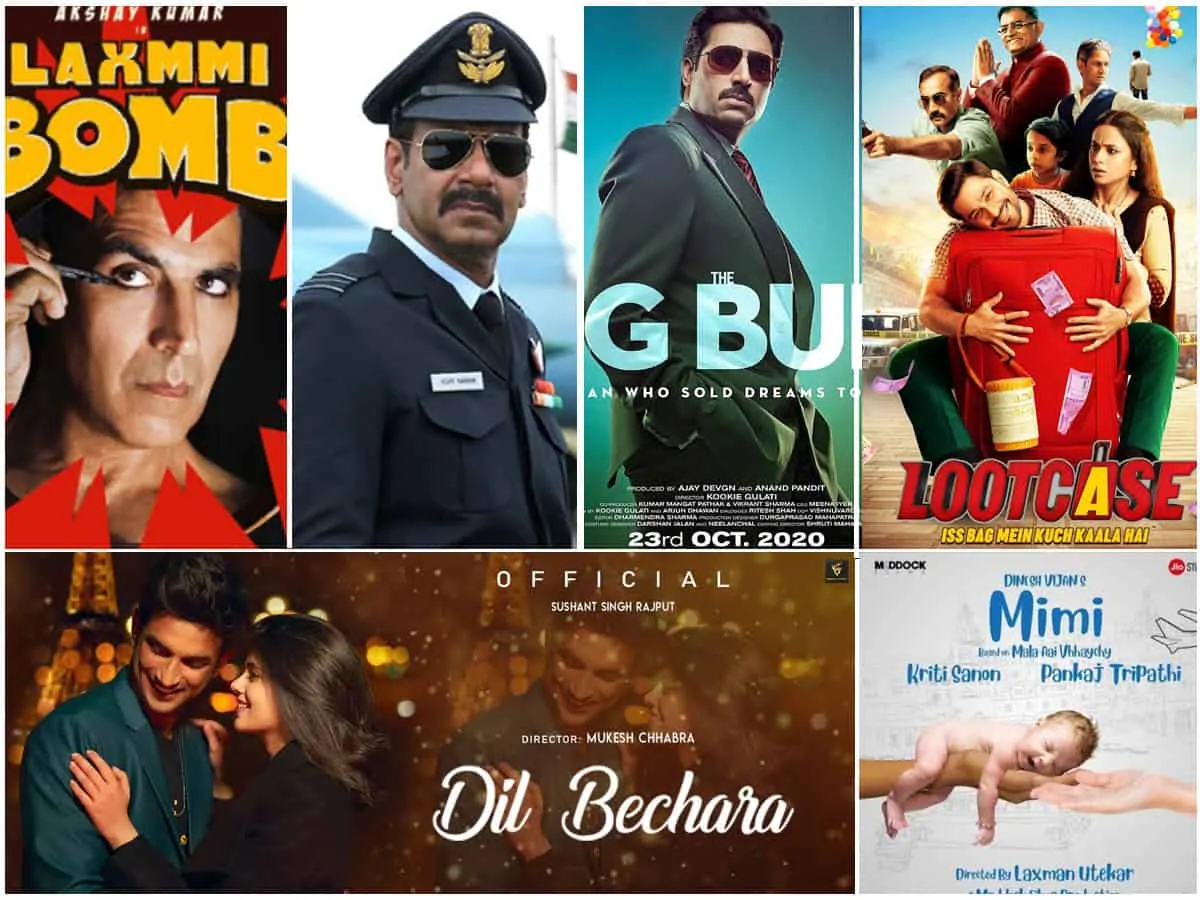
Over the last few years, Bollywood has undergone one of the biggest structural changes in its history. Films that were once designed strictly for theatrical release are now being made directly for OTT platforms, with no plans to hit cinema screens. What started as a temporary adjustment during the pandemic has, by 2025, become a permanent and strategic release model.
Direct-to-OTT Bollywood films are no longer exceptions. They are a growing category of their own—shaping budgets, storytelling choices, star careers, and audience expectations.
How direct-to-OTT became mainstream
When theatres shut down during the pandemic, streaming platforms became the only outlet for completed films. Producers sold projects quickly, often at discounted rates, just to recover costs.
At the time, many in the industry saw this as a compromise.
But once theatres reopened, something unexpected happened. Several OTT-released films found large, engaged audiences, sometimes larger than what a limited theatrical run could have achieved.
Producers took note. OTT was no longer just a backup—it was a viable first option.
The financial logic behind OTT-first releases
The strongest reason for the rise of direct-to-OTT films is financial clarity.
A theatrical release comes with uncertainty:
- Box office performance depends on opening weekend
- Marketing costs are high
- Screen availability can change quickly
- Negative word-of-mouth spreads fast
OTT deals, by contrast, offer:
- Guaranteed upfront payments
- Lower marketing expenses
- Faster cost recovery
- Reduced risk exposure
For mid-budget films especially, OTT often makes more financial sense than theatres.
What kinds of Bollywood films work best on OTT
Not all films succeed equally on streaming. Over time, clear patterns have emerged.
Story-driven dramas
Films that focus on strong writing, social themes, or character journeys tend to perform well. Audiences watching at home are more patient with slower narratives.
Thrillers and crime dramas
OTT viewers prefer gripping plots and layered storytelling. These films benefit from repeat viewings and word-of-mouth recommendations.
Slice-of-life stories
Everyday stories that may struggle to pull crowds into theatres often find appreciation on streaming platforms.
Experimental and niche films
OTT allows space for films that don’t fit traditional Bollywood formulas.
What struggles on OTT
Despite its advantages, OTT is not a guaranteed success.
Big spectacle films
Large-scale action films and visual spectacles often feel underwhelming on smaller screens. Without the theatrical experience, their impact is reduced.
Star-driven but weak scripts
OTT audiences are less forgiving. A big name alone cannot carry a poorly written film. Viewer drop-off data makes this failure visible.
Films without a clear identity
OTT platforms are crowded. Films that don’t clearly communicate their genre or tone often get lost.
The changing role of Bollywood stars
Direct-to-OTT releases have altered star dynamics.
Earlier, actors worried that skipping theatres would hurt their image. That stigma has largely disappeared. In fact, OTT films are now seen as:
- Creative experiments
- Performance-driven projects
- Opportunities to explore unconventional roles
However, not all stars benefit equally. OTT exposes weaknesses as clearly as strengths. Performances are closely watched and widely discussed.
Creative freedom vs. quality control
OTT platforms offer greater creative freedom than traditional studios. Filmmakers can explore mature themes, unconventional endings, and longer runtimes.
This freedom has led to some of the most interesting Bollywood storytelling in recent years.
But it has also resulted in:
- Overlong films
- Lack of editing discipline
- Inconsistent pacing
Without the pressure of theatrical performance, some projects suffer from weak execution.
Audience expectations are different
OTT audiences watch films differently.
They pause, rewind, multitask, and sometimes abandon films halfway. This behavior has influenced how films are written:
- Faster openings
- Clear genre signals
- Early engagement hooks
Films that take too long to establish direction risk losing viewers.
Marketing challenges in the OTT space
Unlike theatres, OTT platforms release multiple films each month. This creates visibility challenges.
A film’s success depends heavily on:
- Platform placement
- Algorithm recommendations
- Social media buzz
Many good films fail simply because they don’t get promoted enough or are released alongside bigger titles.
Critical reception vs. viewership
One interesting trend is the disconnect between reviews and popularity.
Some critically praised OTT films attract limited viewership, while simpler films perform better due to accessibility and familiarity.
OTT success is measured not just by quality but by completion rates and engagement—metrics not visible to the public.
Impact on theatrical cinema
Direct-to-OTT releases have reshaped theatrical cinema rather than replacing it.
Theatres are increasingly reserved for:
- Event films
- Franchise releases
- Big-star spectacles
Mid-budget, content-driven films are finding safer ground on OTT.
This division has created a clearer separation between theatrical and streaming cinema.
What the future looks like
By 2025, direct-to-OTT Bollywood films are no longer experimental. They are planned from the script stage with streaming audiences in mind.
Budgets are adjusted, storytelling is tailored, and release strategies are decided early.
OTT is no longer a second choice—it is a different creative ecosystem.
Final word
The rise of direct-to-OTT Bollywood films reflects a changing industry responding to new realities.
Some films flourish in this space. Others struggle. But the model itself is here to stay.
For Bollywood, the challenge now is not whether to choose OTT or theatres—but how to make better films for both.