In today’s time, when most films try to impress with scale, stars, and speed, 12th Fail arrives quietly. No loud promotions. No glamorous trailers. No superstar presence. And yet, watching it in a theatre feels deeply personal. It reminds you why cinema does not always need spectacle to make an impact.
12th Fail, directed by Vidhu Vinod Chopra, is a simple film about perseverance, dignity, and honest struggle. It does not shout its message. It does not chase applause. It simply tells a story—and trusts the audience to feel it.
The story: ordinary, yet powerful
12th Fail is based on the real-life journey of Manoj Kumar Sharma, a boy from a small village who fails his 12th exams and later dreams of becoming an IPS officer.
The story follows his early failures, family struggles, and his slow, painful climb through India’s competitive exam system. There are no shortcuts, no miracles, and no dramatic twists.
Everything unfolds step by step, just like real life.
This honesty is the film’s biggest strength.
Theatre experience: silence that speaks
Watching 12th Fail in a theatre is a rare experience. The hall is quiet—not because the film is boring, but because it demands attention.
There are moments where you can hear nothing but the sound of breathing around you. Scenes involving failure, poverty, and humiliation hit hard because they feel real.
Unlike mass films, there are no moments of cheering or clapping. Instead, there is a shared emotional understanding in the room.
By the end, many viewers sit still, absorbing what they have seen.
Vikrant Massey: a career-defining performance
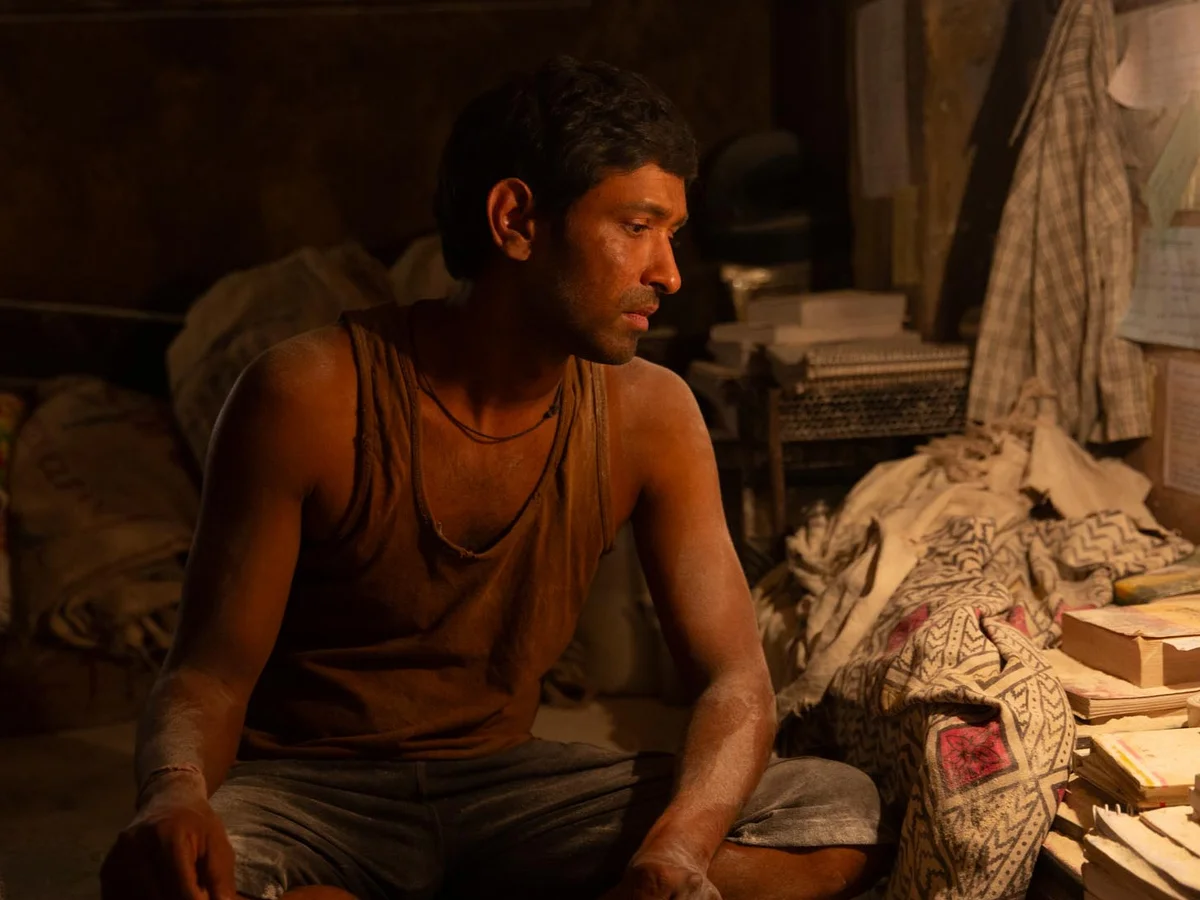
Vikrant Massey delivers a performance that feels lived-in and sincere. He does not “act” the struggle—he becomes it.
As Manoj, Massey portrays innocence, frustration, determination, and quiet self-respect with remarkable control. His body language changes as the character grows. His voice remains soft, but his conviction grows stronger.
In a theatre, his performance holds your attention without demanding it. This is rare and impressive.
This is easily one of the finest performances in recent Hindi cinema.
Supporting cast: grounded and believable
The supporting cast complements the film beautifully. Manoj’s family members feel real, not dramatic. Their reactions are restrained, realistic, and deeply human.
Friends and fellow aspirants add emotional layers to the narrative. Each character represents a different outcome of the same dream—some succeed, some struggle, some give up.
No one feels like a side character. Everyone feels like someone you might know.
Vidhu Vinod Chopra’s direction: maturity over spectacle
Vidhu Vinod Chopra directs 12th Fail with remarkable restraint. Known for emotionally rich films, he chooses simplicity here.
There are no background music cues telling you how to feel. Scenes are allowed to breathe. Silence is used effectively.
The black-and-white cinematography adds to the realism, stripping the film of unnecessary distraction. It focuses your attention on faces, expressions, and moments.
This is storytelling without manipulation.
Writing: honest and unafraid
The writing avoids exaggeration. Failure is shown as it is—slow, repetitive, and exhausting. Success is not portrayed as a dramatic climax but as a natural result of persistence.
The film does not romanticize poverty or struggle. It respects it.
Dialogues are minimal and meaningful. There are no motivational speeches meant to go viral. Instead, small lines stay with you longer.
Music and background score
The background score is gentle and used sparingly. Music supports emotions without leading them.
There are no songs designed for charts. Every musical element exists only to serve the story.
This restraint keeps the film grounded.
A mirror to India’s exam culture
One of the film’s biggest strengths is how accurately it reflects India’s exam-driven society. Millions of students see themselves in Manoj’s journey.
The pressure, the shame of failure, the financial burden, and the emotional isolation are portrayed with sensitivity.
The film does not blame the system loudly. It simply shows its reality.
This makes the message stronger.
Where the film may feel slow
Some viewers may find the pacing slow, especially those used to fast-moving narratives. The film takes its time, and deliberately so.
But this slowness is intentional. It mirrors the long, uncertain journey of its protagonist.
Those expecting dramatic twists or emotional highs may feel restless.
Audience reaction in theatres
The audience response is deeply respectful. There is no noise, but there is engagement.
At the end of the film, the silence feels heavy. Then come soft claps—not out of excitement, but appreciation.
People leave the theatre thoughtful, many discussing their own struggles or those of someone they know.
This is cinema that connects quietly.
Why the film works
12th Fail works because it believes in its story. It does not try to impress. It tries to be honest.
In a time when even inspirational films feel manufactured, this one feels sincere.
It respects its audience’s intelligence and emotions.
Final verdict
12th Fail is a rare Hindi film that succeeds by doing less. It is quiet, honest, and deeply moving.
Powered by an outstanding performance from Vikrant Massey and sensitive direction by Vidhu Vinod Chopra, the film reminds us that conviction matters more than scale.
It may not appeal to everyone, but for those who connect with its world, it leaves a lasting impression.
Rating: ⭐⭐⭐⭐½ out of 5
Who should watch it:
Students, parents, educators, and anyone who appreciates realistic storytelling.
Who may skip it:
Viewers looking for fast-paced entertainment or dramatic spectacle.
12th Fail proves that sometimes, the simplest stories are the hardest to forget.