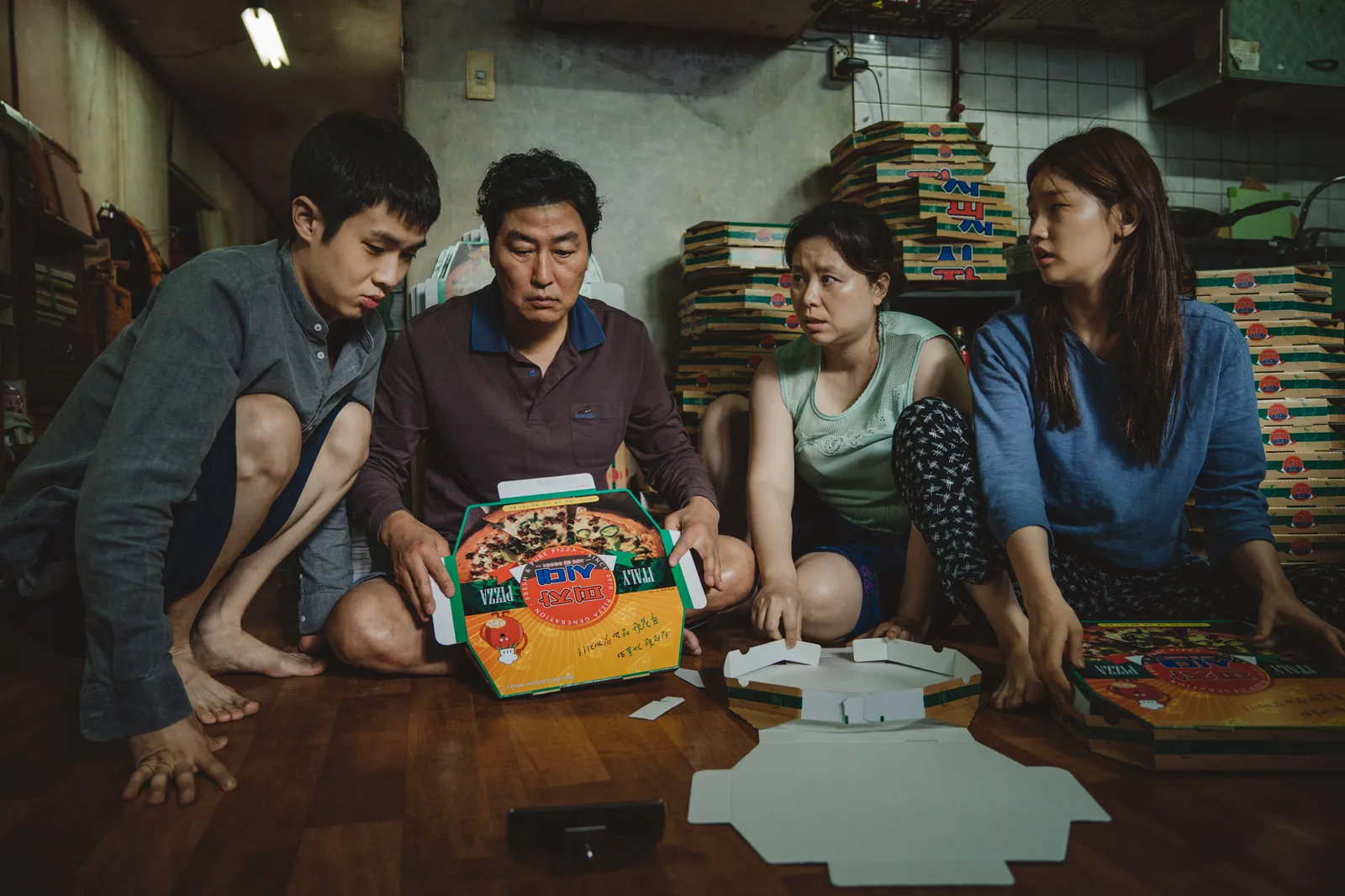
I still remember walking into a small theatre to watch Parasite, not fully knowing what kind of film I was about to see. I had heard the buzz—Palme d’Or winner, Korean film making waves in Hollywood, dark comedy thriller. But nothing really prepares you for Parasite. By the time the credits roll, you don’t just feel entertained—you feel unsettled, thoughtful, and strangely quiet.
As an American amateur film enthusiast, someone who watches movies out of love rather than profession, Parasite felt like a reminder of why cinema matters beyond language, country, or genre.
A story that quietly pulls you in
At its core, Parasite is about two families. The Kim family lives in a cramped basement apartment, struggling to survive through odd jobs and clever shortcuts. The Park family lives in a modern, beautifully designed house, wealthy and comfortably unaware of the world below them.
When the Kims slowly find their way into the Parks’ lives—posing as tutors, drivers, and house staff—the film initially feels like a clever social comedy. There’s humor, wit, and a playful sense of deception.
But Parasite is not a film that stays in one lane.
Genre bending done right
What amazed me most was how effortlessly Parasite shifts genres. It begins like a light comedy, turns into a tense thriller, dips into horror, and ends as a tragedy—all without feeling forced.
American films often stick tightly to genre rules. Parasite breaks them with confidence. The transitions feel natural because they mirror real life, where emotions and situations rarely stay consistent.
As a viewer, you’re constantly adjusting your expectations—and that keeps you fully engaged.
Bong Joon-ho’s quiet control
Director Bong Joon-ho handles the film with remarkable control. Every scene feels purposeful. Nothing is wasted.
He doesn’t explain his ideas through dialogue. Instead, he lets framing, movement, and silence do the work. A staircase becomes a symbol. Rain becomes a turning point. A smell becomes a dividing line between classes.
This kind of visual storytelling feels refreshing, especially compared to films that rely heavily on exposition.
Performances that feel real, not dramatic
The performances in Parasite are grounded and believable. Song Kang-ho, who plays the Kim family father, delivers a performance filled with restraint. His expressions often say more than his words.
The rest of the cast—both the struggling Kims and the wealthy Parks—feel human, not exaggerated. No one is portrayed as purely evil or purely good. Everyone is just trying to survive in their own way.
That moral gray area makes the film more powerful.
The house as a character
The Park family’s house deserves special mention. It’s not just a setting—it’s part of the story.
Its clean lines, open spaces, and hidden corners reflect the illusion of control and security. As the film progresses, the house slowly reveals its secrets.
Watching this on a big screen makes you appreciate how carefully the space is used. Every doorway and staircase has meaning.
Class commentary without speeches
What struck me most is how Parasite talks about class without ever delivering a speech about it.
There are no political monologues. No obvious moral lessons. Instead, class is shown through everyday details—who rides the subway, who drives a car, who looks down, and who looks up.
As an American viewer, these themes feel painfully familiar. The film may be Korean, but its message crosses borders easily.
A turning point that changes everything
Midway through the film, there is a moment that completely shifts the tone. It’s shocking, but not in a cheap way. It redefines everything you thought the film was about.
In the theatre, I remember feeling the room go silent. People stopped eating popcorn. Everyone leaned forward.
That kind of shared tension is rare—and unforgettable.
The ending that stays with you
The ending of Parasite doesn’t give comfort. It doesn’t offer solutions. It leaves you thinking.
Some viewers may find it bleak, but I found it honest. It reflects how systems trap people, how dreams feel close but remain unreachable.
Days after watching the film, scenes kept replaying in my mind. That’s when I knew this was something special.
Why Parasite matters to global cinema
Parasite winning the Academy Award for Best Picture felt historic, but more importantly, it felt deserved.
It proved that subtitles are not a barrier, that storytelling is universal, and that audiences are ready for challenging films if they are told well.
For someone like me—who watches films out of curiosity and love—it was inspiring to see a non-English film connect so deeply with American audiences.
Rewatch value
This is a film that gets better with a second viewing. You notice foreshadowing, visual cues, and small details that seemed harmless the first time.
Each rewatch deepens your understanding.
Final thoughts
Parasite is not just a great Korean film—it’s a great film, period. It entertains, unsettles, and challenges without ever explaining itself.
As an amateur film enthusiast, I walked out of the theatre feeling grateful—to have witnessed a film that respects its audience’s intelligence.
Rating: ⭐⭐⭐⭐⭐ out of 5
Who should watch it:
Anyone who loves intelligent cinema, thrillers with depth, and stories that stay with you long after the screen goes dark.
Who may struggle with it:
Viewers looking for light entertainment or clear moral answers.
Parasite reminds us that sometimes the most powerful films are the ones that speak softly—and let us listen.